

Rome makes history feel immediate. Turn a corner and you find a centuries-old piazza. Step into a church and discover a masterpiece. Walk among ruins that once stood at the center of an empire. Here, fountains, churches, monuments, and ancient streets are not separate attractions; they are part of the city itself.
A visit offers grand architecture, remarkable art, and the pleasure of exploring streets shaped by generations.
Exploring the Heart of Rome
Piazza Navona is an ideal place to begin. Its fountains and elegant buildings frame a lively square that has drawn people for centuries. It invites you to slow down and take in the city.
Some of Rome’s greatest works are tucked inside its churches. San Pietro in Vincoli, for example, houses Michelangelo’s statue of Moses. The sculpture’s detail and presence are extraordinary. In Rome, even a modest church can hold a world-class work of art.
Other landmarks are familiar from photographs, yet more impressive in person. The Trevi Fountain, completed in the eighteenth century, stands out for its scale and elaborate design. The Pantheon reaches much further back: rebuilt under Emperor Hadrian and completed around AD 126, its vast dome and open oculus remain marvels of engineering.
Then there is the Colosseum. Once the setting for spectacles before enormous crowds, it still conveys the ambition and scale of ancient Rome. Its weathered stone makes the empire’s history feel tangible.


The Roman Forum and the Vatican
The Roman Forum was the center of public life in ancient Rome. Today, its columns, foundations, and fragments of buildings trace the outline of a place where politics, commerce, religion, and public gatherings once converged. Walking among the ruins, you begin to imagine the activity that filled these streets.
Rome’s religious heritage is just as visible. Images of the Madonna and Child appear in grand churches and quieter corners throughout the city. They reflect the influence of Catholic tradition on Rome’s art and identity.
Vatican City offers another sense of scale. St. Peter’s Basilica is monumental, inside and out. Its architecture, decoration, and mosaics reward a close look; the detail is remarkable.
The view from the top of the dome is worth the climb. St. Peter’s Square spreads out below, with Rome beyond it. From above, the square’s scale becomes clear—a striking contrast to the intricate details inside the basilica.


A Journey Further Back in Time: Pompeii
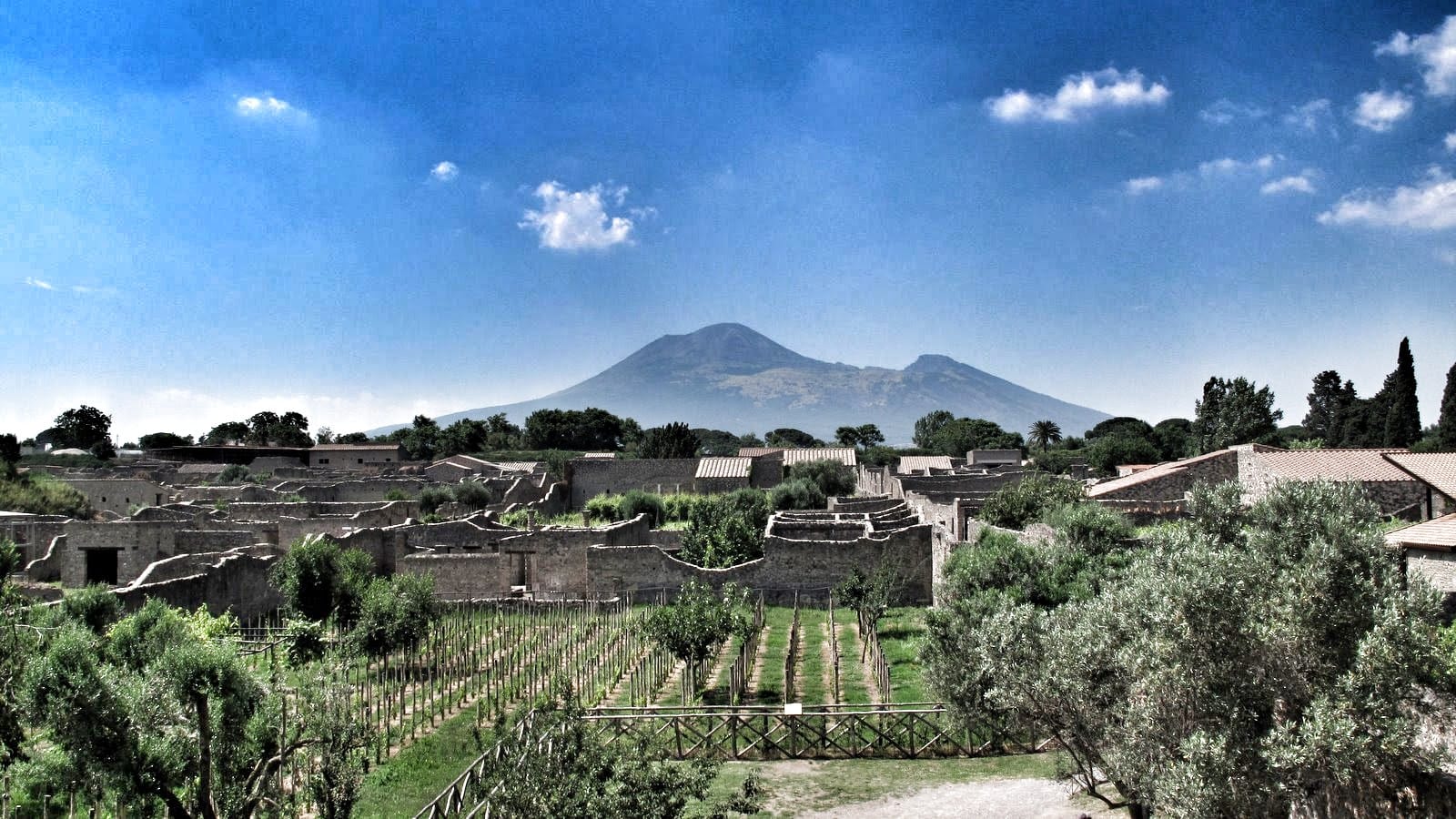
The Roman world extended far beyond the capital. Pompeii, buried when Mount Vesuvius erupted in AD 79, offers an unusually vivid picture of life in a Roman city.
Rather than a few isolated monuments, Pompeii is an extensive town you can explore on foot. Its streets, buildings, and public facilities reveal how people lived. The remains of bathing areas, for example, offer a glimpse of the routines and social customs of the time.
Ordinary places can be the most compelling. A street corner or bathing room may seem unremarkable at first. Then you remember that people used these spaces nearly two thousand years ago. Pompeii makes the past feel close.


Rome Is More Than Its Landmarks
Rome’s greatest attraction may be the way history appears at every turn. The famous sights live up to their reputations, but the city also rewards curiosity. A church holds a masterpiece. A quiet corner reveals a piece of religious history. A public square connects the present with centuries of daily life.
The Vatican and Pompeii deepen that experience. One reflects the artistic and religious influence of the Catholic Church; the other preserves a community interrupted in a single moment. Together, they offer a wider view of the people and civilizations that shaped this part of the world.
These photographs capture only a fraction of what the area has to offer. Rome is too rich to absorb in one visit. There is always another street, monument, church, or piece of history waiting around the corner.
Rome really is something else.